As sustainability becomes a key purchasing factor in the construction and materials industry, RPET for waterproof applications is gaining significant attention.
Made from recycled polyethylene terephthalate fibers, RPET nonwoven fabric combines environmental responsibility, high tensile strength, and excellent dimensional stability, making it an ideal reinforcement layer for modern waterproof membrane systems.
For membrane manufacturers and construction material suppliers, RPET offers a strong balance between performance and sustainability.
What Is RPET for Waterproof Use?
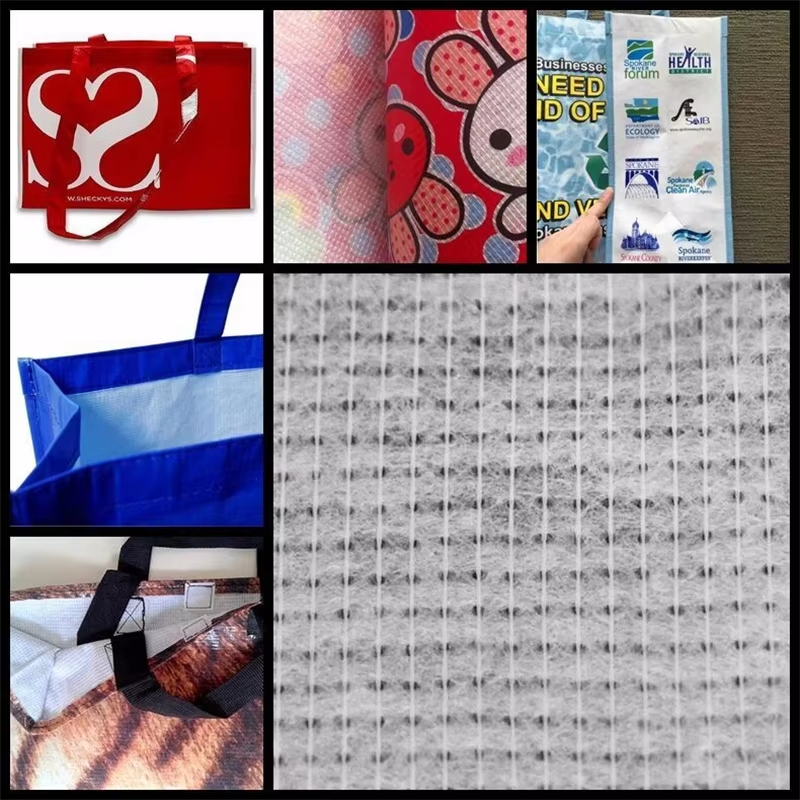
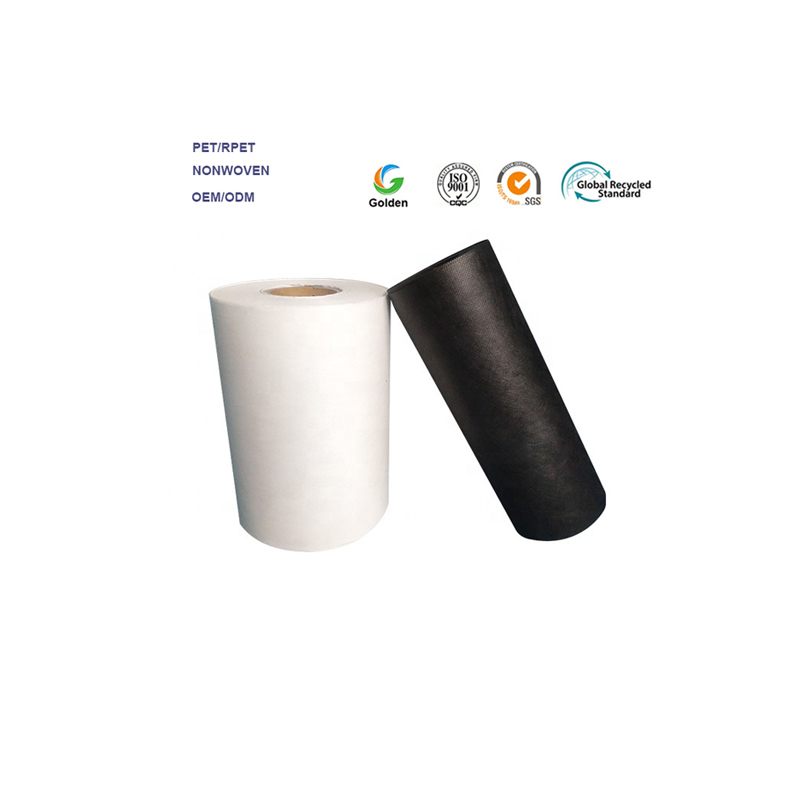
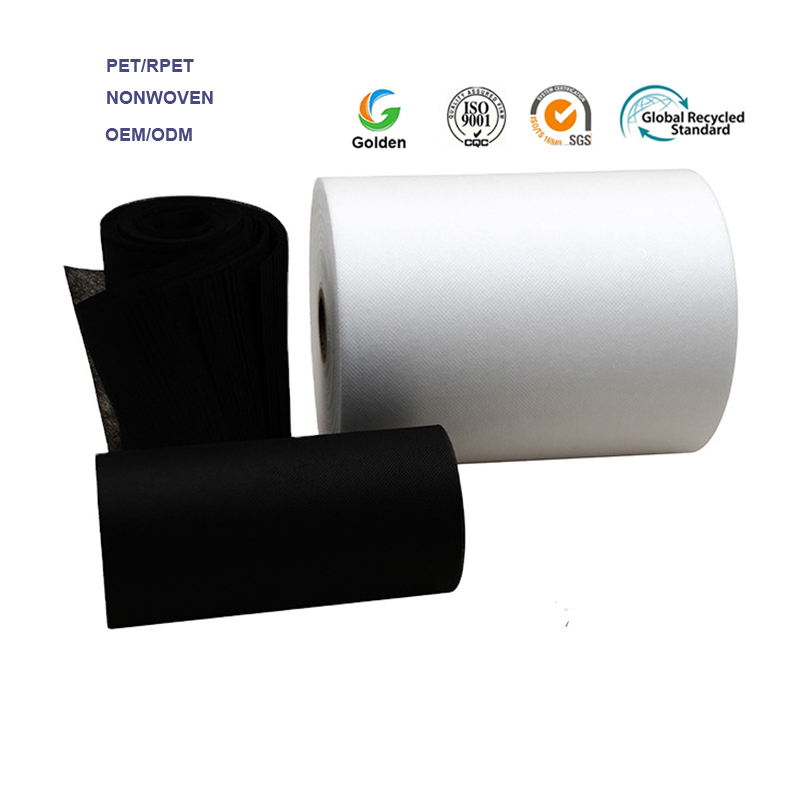
RPET (recycled PET) is produced from recycled plastic bottles and polyester waste, processed into durable fibers and converted into nonwoven fabric, felt, or reinforcement sheets.
In waterproof applications, RPET is commonly used as:
- reinforcement backing fabric
- waterproof membrane substrate
- roofing membrane support layer
- underground waterproofing reinforcement
This allows manufacturers to offer eco-friendly waterproof materials without compromising product performance.
Why RPET Is Ideal for Waterproof Systems
1. Sustainable and Eco-Friendly
One of the biggest advantages of RPET is sustainability.
By using recycled PET bottles, manufacturers can reduce virgin plastic consumption and support circular production.
This is highly attractive for buyers in:
- Europe
- North America
- green building projects
2. High Tensile Strength
Waterproof membranes require strong reinforcement to resist:
- tearing
- pulling force
- installation stress
RPET nonwoven fabric offers excellent tensile performance.
3. Excellent Dimensional Stability
Temperature fluctuations can cause membrane deformation.
RPET helps maintain:
- structural stability
- size consistency
- long-term durability
This is critical for roofing and underground waterproofing.
4. Excellent Coating Compatibility
RPET works well with common waterproof systems such as:
- bitumen
- SBS / APP membranes
- PVC / TPO membranes
- PE coatings
This makes it an ideal substrate fabric.
5. Long Service Life
Compared with lower-grade materials, RPET offers better aging resistance and service life.
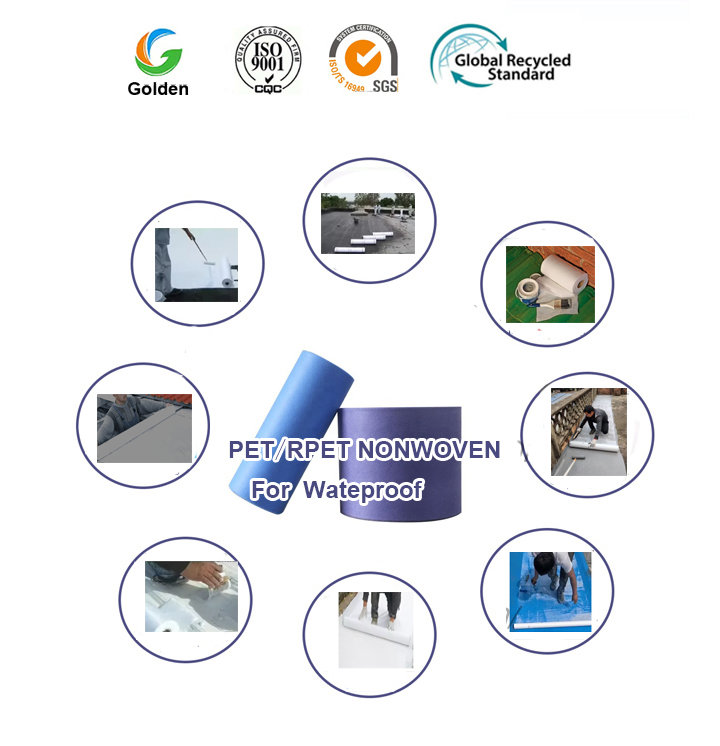
Main Applications of RPET for Waterproofing
🏠 Roofing Membranes
Used as reinforcement fabric in:
- residential roofs
- warehouses
- industrial buildings
🏗️ Bitumen Waterproof Sheets
Ideal for SBS / APP modified membranes.
🚇 Underground Waterproofing
Suitable for:
- basements
- tunnels
- underground structures
🧱 Wall and Floor Protection
Used in wall membranes and floor waterproof layers.
Common RPET Materials for Waterproof Use
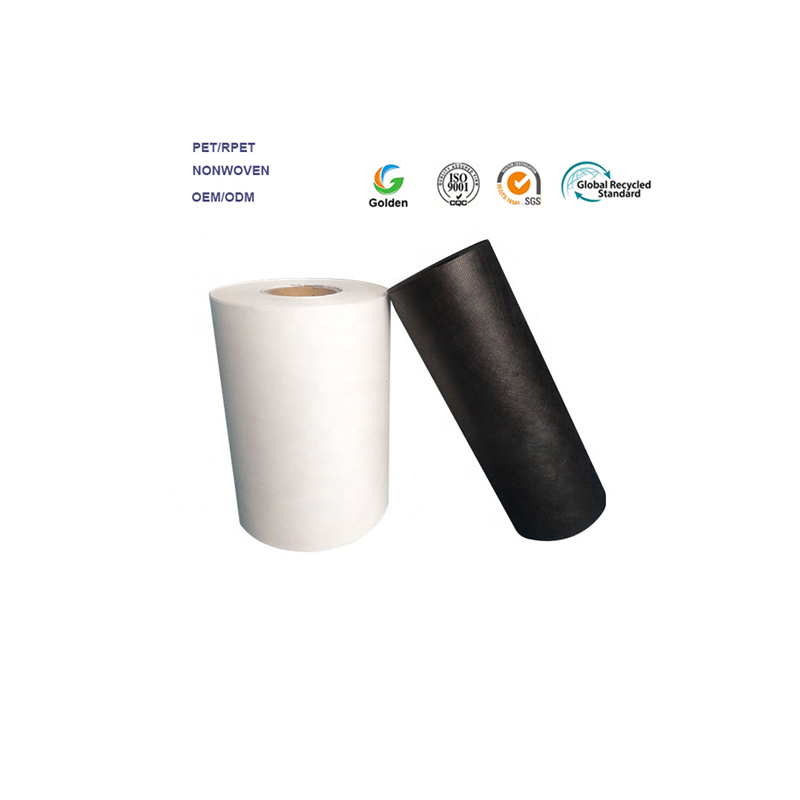
RPET Nonwoven Fabric
Most common option.
Suitable for membrane backing.
RPET Needle Punched Felt
Suitable for heavy-duty reinforcement.
RPET Stitchbond Fabric
Used for high-strength waterproof systems.
Common Specifications
Typical options include:
- 80–120gsm → standard waterproof membranes
- 120–180gsm → roofing use
- 180gsm+ → industrial projects
Width options:
- 100cm
- 160cm
- 240cm
- 320cm
Custom roll width available.
RPET vs Virgin PET for Waterproof
| Feature | RPET | Virgin PET |
|---|---|---|
| Sustainability | ⭐⭐⭐⭐⭐ | ⭐⭐ |
| Strength | ⭐⭐⭐⭐ | ⭐⭐⭐⭐⭐ |
| Cost | Competitive | Slightly higher |
| Green Building | Excellent | Good |
👉 For eco-friendly projects → RPET is preferred
Key Benefits for Waterproof Manufacturers
Using RPET helps factories achieve:
- greener product lines
- export compliance
- sustainable branding
- stable membrane performance
Especially suitable for LEED / green construction projects.
Custom RPET Solutions for Waterproof Industry
OEM options include:
- custom GSM
- anti-UV treatment
- flame retardant
- waterproof coating compatibility
- custom roll widths
Why Global Buyers Choose RPET for Waterproofing
Global buyers choose RPET because it offers:
- sustainability advantages
- excellent reinforcement strength
- strong export appeal
- eco-friendly compliance
Especially suitable for:
- waterproof membrane factories
- roofing suppliers
- green building material companies
Frequently Asked Questions
Is RPET suitable for waterproof membranes?
Yes, it is widely used as reinforcement backing.
Is RPET eco-friendly?
Yes, it is made from recycled PET materials.
Can RPET be used for roofing?
Yes, especially in sustainable roofing systems.
Conclusion: Choose High-Quality RPET for Waterproof Applications
If you need a strong, sustainable, and reliable reinforcement fabric, RPET for waterproof systems is an excellent solution.
From roofing membranes to underground waterproofing, it delivers both performance and environmental value.
👉 Contact us today for samples, bulk pricing, and custom RPET waterproof fabric solutions