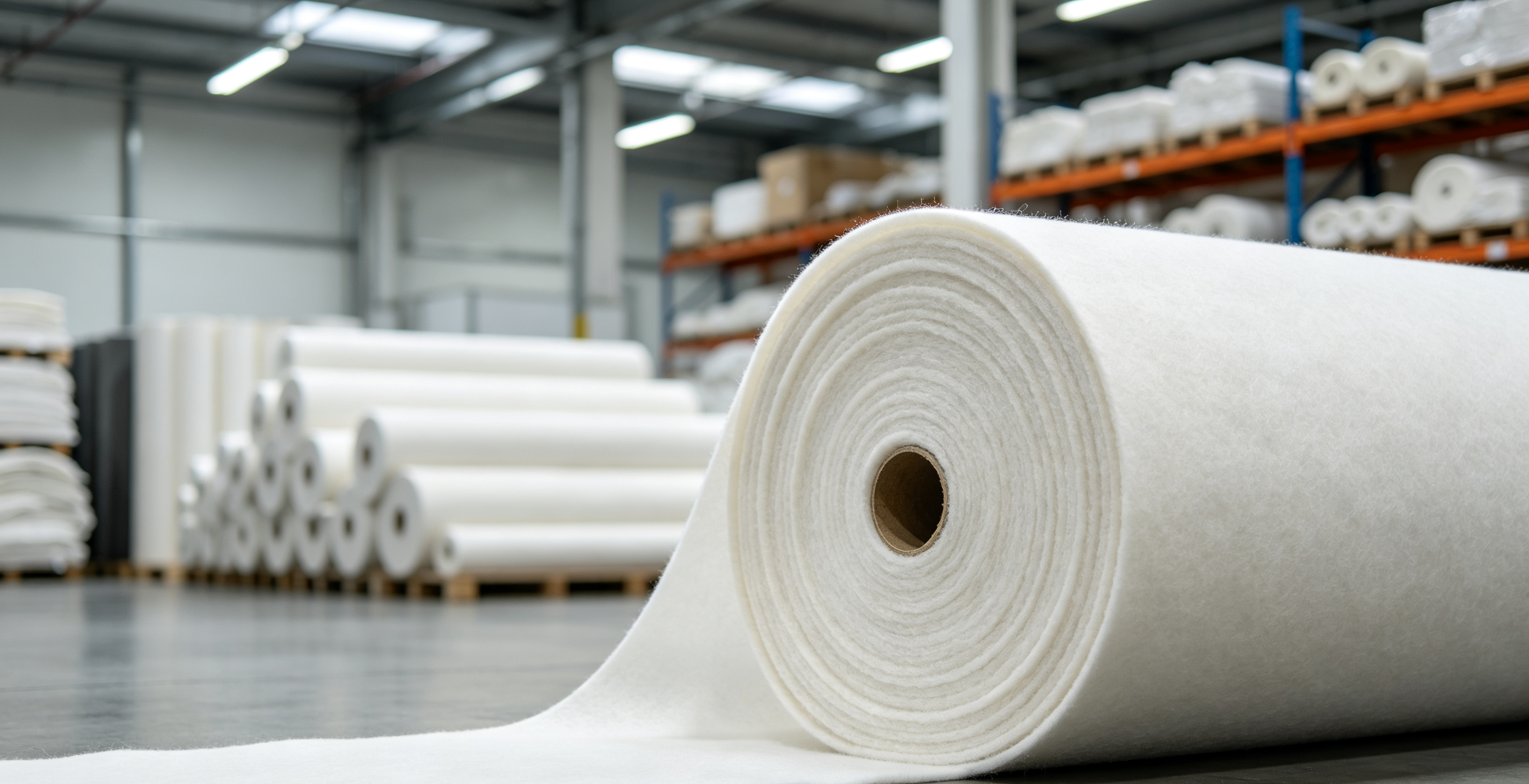
Needle punched felt is one of the most widely used nonwoven textiles in manufacturing, construction, automotive, filtration, crafts, and home décor. Unlike woven fabric or chemically bonded felt, it uses mechanical needle entanglement to lock fibers into a stable, dense, and flexible material without glue or excessive heat.
How Is Needle Punched Felt Made?
The production process is clean, efficient, and consistent:
- Fiber blending (polyester, wool, aramid, or recycled fibers)
- Web formation to create a loose fiber layer
- Needle punching with barbed needles that tangle fibers together
- Calendering, finishing, or coating for thickness, density, and performance
- Cutting into rolls, sheets, or custom parts
No harmful adhesives or excessive chemicals are used, making it eco-friendly and safe for many applications.
Key Advantages of Needle Punched Felt
✅ High Durability & Tear Resistance – Resists fraying, stretching, and heavy wear
✅ Thermal & Acoustic Insulation – Ideal for insulation panels and sound absorption
✅ Excellent Filtration – Porous structure traps dust, particles, and liquids
✅ Water & Chemical Resistance – Stable in tough industrial environments
✅ Lightweight & Flexible – Easy to cut, sew, mold, and install
✅ Cost-Effective – Lower production cost than many engineered fabrics
✅ Eco-Friendly Options – Recyclable polyester and biodegradable blends available
Top Applications of Needle Punched Felt
1. Industrial Filtration
Bag filters, dust collector cartridges, liquid filtration liners, and air purification systems.
2. Automotive
Interior linings, carpet backing, sound deadening pads, heat shields, and gaskets.
3. Construction & Insulation
Roofing underlayment, wall insulation, acoustic panels, and flooring underlay.
4. Packaging & Protection
Shock-absorbing padding, surface protection sheets, and anti-scratch liners.
5. Crafts & Home Décor
DIY craft felt, coasters, wall hangings, bags, ornaments, and educational supplies.
6. Geotextiles & Engineering
Erosion control, drainage layers, and soil stabilization for civil projects.
How to Choose the Right Needle Punched Felt
- Material: Polyester (most common), wool, aramid (high temp), or recycled
- Thickness: 1mm to 20mm+ for different strength and insulation
- Density: Lightweight (crafts) vs heavy-duty (industrial/filtration)
- Finish: Plain, flame-retardant, waterproof, anti-static, or UV-stabilized
- Color & Size: Custom rolls, sheets, die-cut parts, or colored felt
Why Needle Punched Felt Is a Smart Choice
From small crafts to heavy industry, needle punched felt delivers reliable performance, versatility, and value. It replaces costly materials while improving durability and sustainability.
If you need custom needle punched felt for your project, contact our team for material specs, samples, and bulk pricing.